Posts

Aneurin Bevan - 'Father of the NHS'

Image
     Hi! This is the first post of a new series that I have wanted to start for a long time, I have called it 'Welsh Figure Wednesdays'. These posts will feature important Welsh figures who have contributed to Welsh society in many ways.    In this blog post, we will be discussing Aneurin Bevan and his role in Welsh politics and the National Health Service.                                                                 ( This image was found  here ) Aneurin (pronounced as an-eye-rin) 'Nye' Bevan was born in Tredegar, in 1897, into a large mining family. Aneurin left school at the age of thirteen to work in the mine, later he became active in trade unionism and a well-known orator and social commentator.      During the 1920s Bevan worked ti...

Let’s Discuss, W. B. Emery and Chris Naunton’s ‘Searching for the Lost Tombs of Egypt’.

Image
  I recently read Chris Naunton’s ‘Searching for the Lost Tombs of Egypt’, and I must admit that I could not put it down. I hate to admit it but I tend to struggle reading historical fiction, part of me thinks it was down to my four years at university just ‘skim’ reading, training myself to pick out certain parts of the text focusing on my assignments, so this was a pleasant surprise. I found the book to be clear and concise whilst considering opinions from other historians. I must also comment on the images used in the book, which are visually stunning and allow the reader to visualise certain artefacts mentioned throughout each chapter. As I delve deeper into my ancient Egypt interest, the chapters based around Imhotep, Amenhotep I, Tutankhamun (of course), Cleopatra, and Alexander the Great were informative. I was able to learn a lot more about the Greek involvement in Egypt, which I did not know a lot about. I also liked how at the end of the book there is a timeline of th...

TV Recommendation: Bettany Hughes' Pompeii: Secrets of the Dead.

Image
  I recently watched Bettany Hughes’ documentary which focused on the victims of the Mount Vesuvius eruption in 79 AD (the documentary is currently on my5 and was broadcast on Thursday the 28th October). As a big fan of her documentaries, I was intrigued to see what this documentary would entail. I have watched many of Bettany’s programmes, including the various ancient Egypt documentaries, as well as ones including Ancient Greece, and lastly Rome/Pompeii and they have all been equally fascinating/interesting.             The eruption of Mount Vesuvius in 79 AD has been coined as ‘one of the deadliest eruptions in Europe’. Many of Pompeii, Oplontis, and Stabiae’s inhabitants were buried under ash, whilst Lapilli and Herculaneum were buried under a mudflow (taken from here ). Furthermore, an article written by Jessica Ball stated that the eruption killed more than 16,000 people due to the ash, mud, and rocks that rained down o...

Let's Discuss... 'The Dig' and the Sutton Hoo Excavation

Image
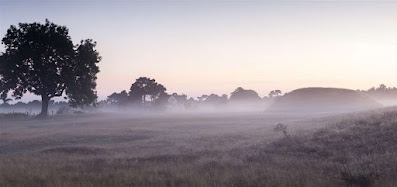
  POST CONTAINS SPOILERS BELOW I recently watched  ‘The Dig’ – starring Lily James, Carey Mulligan and Ralph Fiennes. The film itself was based on the 2007 book written by John Preston, his aunt Margaret Preston was one of the archaeologists who participated in the dig. Whilst watching a historical film, you must take it with a pinch of salt as most historical films are not entirely factually correct. In this instance, the cousin of Edith Pretty known as Rory Lomax who was in a romantic relationship with Peggy Piggott was not entirely correct, you can find more comparisons of the film vs real life here .       Overall, it was a feel-good film.  I personally sympathised with archaeologist Basil Brown, who in the film was constantly undermined by Charles Phillips, a British archaeologist known for ‘leading’ the 1939 excavation. At the end of the film, it mentioned that Basil's work was not recognised until recently. The dig itself saw the excavation ...

Being a Graduate during a Global Pandemic...

 Okay, so this is not a 'light' topic of discussion in this blog. It is a topic that I have wanted to write about for a while now, and I thought that this was the right time to do so.  To introduce myself, my name is Emma and I am a graduate. I completed my BA in History at Aberystwyth University in 2019, and my MA in Modern History in September 2020. I graduated with a 2:2 for my BA and I received a merit for my MA in December 2020. During the 'beginning' of the pandemic here in the U.K *dating to around mid-March 2019* I was faced with completing multiple assignments which included a few 3,000-word essays, as well as a 15,000-word dissertation (I wrote about the commemoration of Chartists on a local and national level, or in other words on a Welsh/British scale).  This was a difficult situation as myself, and many *many* students found to be the case, without the help of our University libraries this task was almost impossible.       So fast-forward ...

The Pharaoh's Golden Parade, and the Lost Golden City.

Image
Jumping straight into this blog post, it has been a wonderful week for Egyptian history!  The Pharaoh's Golden Parade Firstly, On the 3rd April 2021, there was a live stream that was broadcast (I will attempt to attach the URL to the English live stream I watched below) which showed the movement of eighteen kings and four queens of Egypt from the Egyptian Museum in Tahrir to the National Museum of Egyptian Civilisation (NMEC). The spectacle saw music from the United Philharmonic Orchestra with traditional instruments as well as those that are more 'common', with short clips describing some of the historic sites of Egypt, and dancers in costume dancing at locations including:  * The Giza Pyramids Plateau  * The Grand Egyptian Museum * Deir El Bahari Temple, Luxor The 22 Kings and Queens were transported in chronological order to their new resting place, find King Ramesses II pictured below:  *To make this clear, this is NOT my image, I got it from here:  https:/...

Let's Discuss... Welsh traditions and symbols.

Image
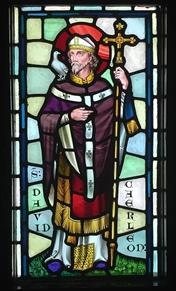
 Let's Discuss... Welsh traditions and symbols. As I am writing this, it is currently the 1st of March which is also known as St David's Day in Wales. So, to any Welsh readers, Dydd  Gŵyl Dewi Hapus! Origins of Saint David's Day:     Saint David was recognised as the national patron saint in the 12th century at the height of Welsh resistance to the Normans and was canonised by Pope Callixtus II. At the moment, St David's Day is not considered a national holiday, unlike Saint Patrick's Day, however, the 1st of March is a day of celebration. During my time in school, the 1st of March meant a 'day off' where we would take part in an Eisteddfod/Eisteddfodau (pronounced Ice - steth - vod / Ice - steth - vod - eye) celebrating Welsh culture including singing Welsh songs, dressing up in our national costume, and writing poems and stories about Welsh culture - such as the story of Beddgelert.      The picture below is a stained-glass depiction of Saint David, ...